


Gas Pipeline Inspections based on G465 Regulations
Discover More
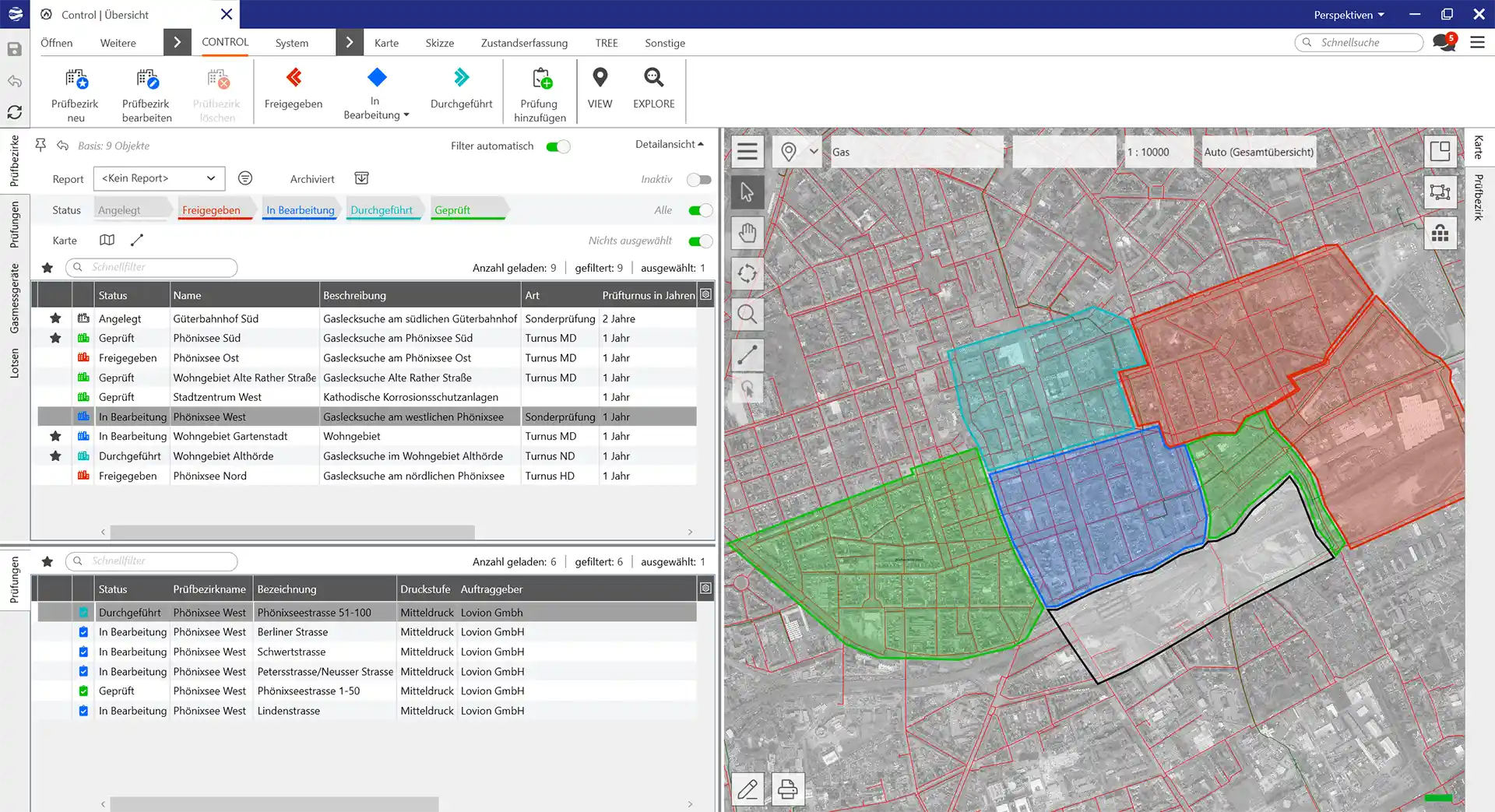
Gas Pipeline Inspections are carried out in Lovion CONTROL based on G495 rules and regulations by the DVGW (German: Deutscher Verein des Gas- und Wasserfaches). These inspections are organised for individual districts and are depicted as individual areas in the map. Inspections, defects and damages are documented for pipeline nodes and grid connections. Furthermore, it is also possible to record inspectors’ routes via GPS. Each documented point contains project-specific attributes such as the name of the inspector, measuring device and location.
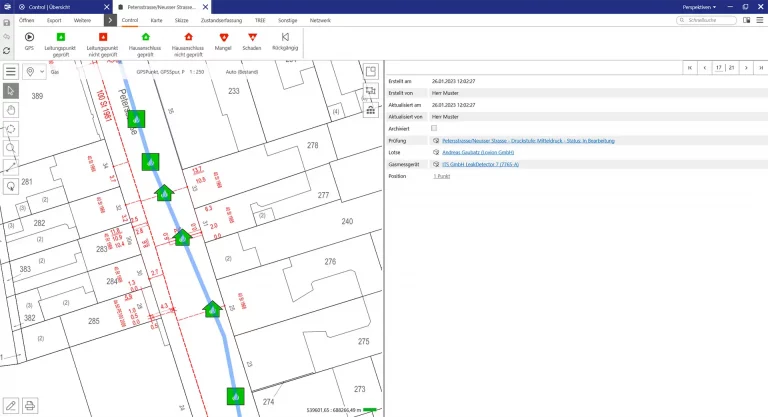
During gas pipeline inspections, pipeline nodes, grid connections, defects and damages are documented digitally. Each point type contains the attribute “status”, which displays a drop-down list that can also be modified by customers. For example, grid connections can have the status “inspected” and “not inspected” or damages can have the status “localised” followed by the classification type “A1”, “A2” or “C”. The combination of point type and status is visualised in the map using unique symbols. Furthermore, it is also possible to attach photos or other documents.
If a defect or damage is identified, it can be documented graphically using a digital sketch. This sketch can be drawn directly in the map using available drawing functions. Preconfigured geometry styles and symbols simplify the sketching process. In addition, a map key and its contents, for example, date, inspector, measuring device and address can be added and tailored to each user’s individual needs.

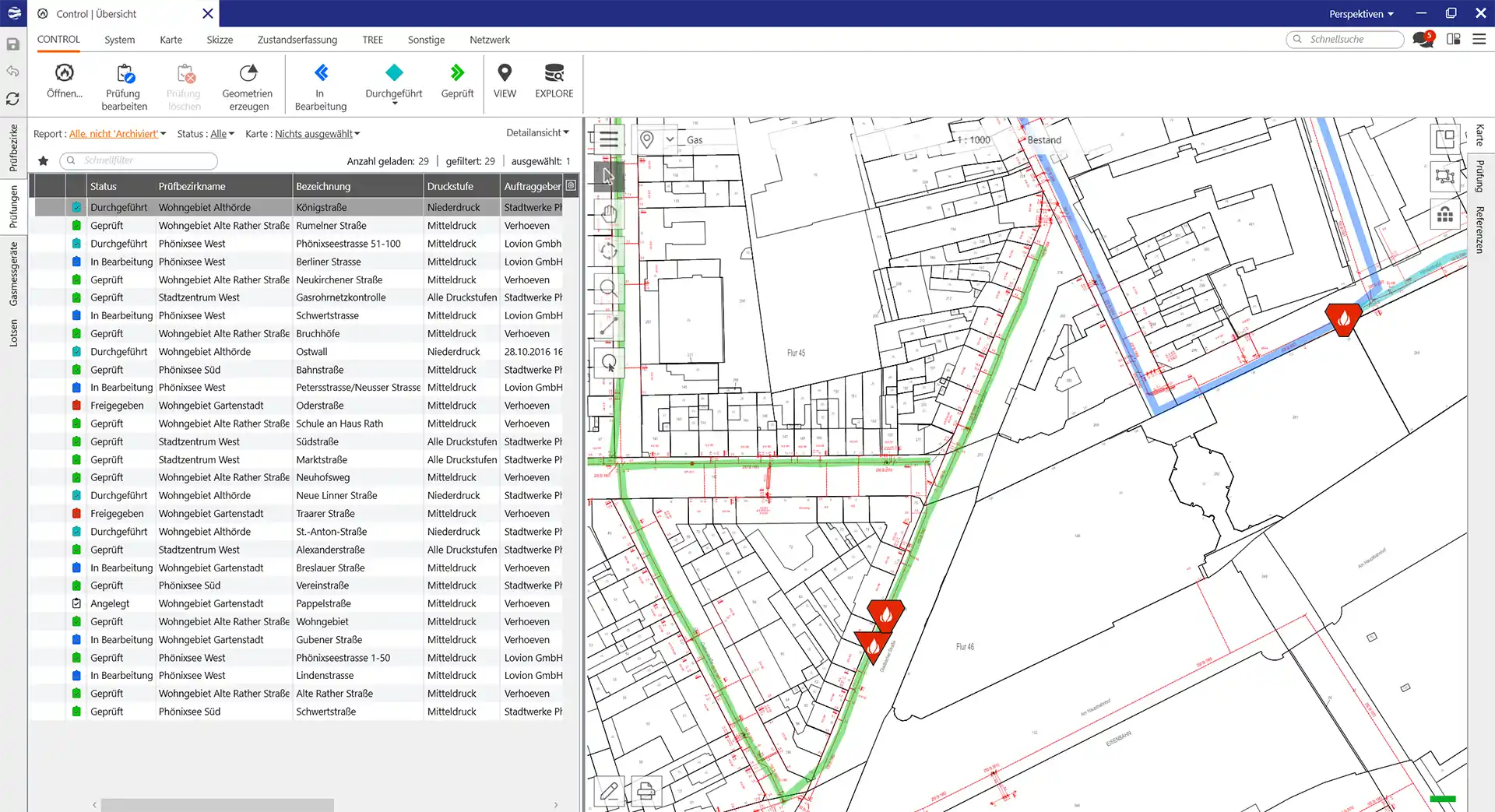
Inspection results can be viewed and evaluated in an overview window with different filtering and query options. For example, a selection of inspections can be prefiltered and then evaluated in more detail. Once inspections are archived, they cannot be edited anymore and are legally binding. Archives are usually created once a year.
